Signal is adding new protections to prevent AI assistants such as Siri AI and Gemini from accessing private messages and other content displayed in the app. Signal announced the improvements in an in Signals offiziellem Blog-Artikel.
AI assistants built into mobile operating systems can potentially access information displayed on your screen, including Signal messages and media.
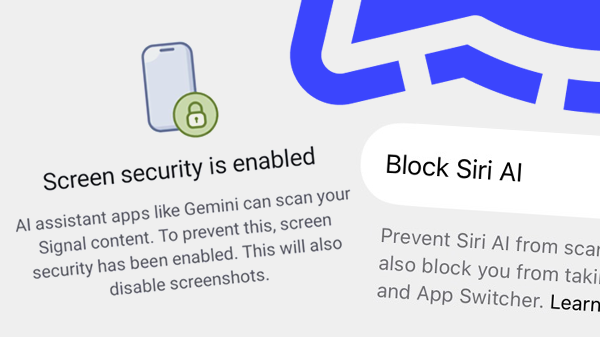
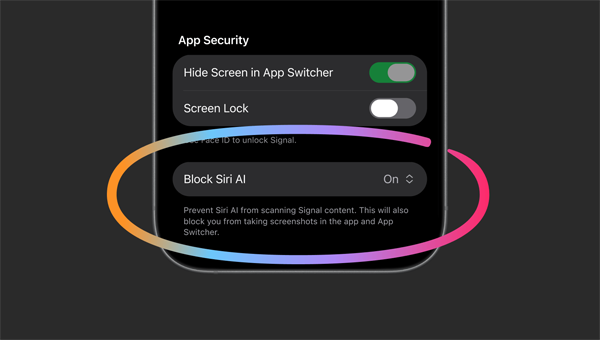
On iOS 27, Signal introduces a new “Block Siri AI” option under Settings > Privacy. When enabled, it prevents Siri AI from accessing Signal content. This also blocks screenshots and hides Signal content from the App Switcher. Users can turn off the protection entirely or temporarily disable it for 10 minutes when they want to take screenshots. However, Signal warns that doing so could expose their messages and their contacts’ content to AI agents, undermining its privacy guarantees.
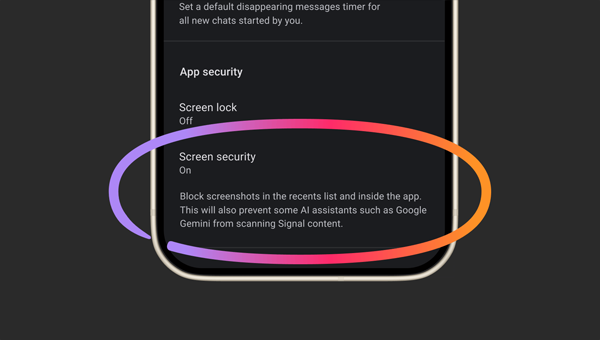
On Android, Signal uses its existing “Screen security” feature to block screenshots and prevent AI assistants from accessing screen content. Rather than detecting screenshot attempts, Signal focuses on detecting when an AI assistant tries to access the screen and automatically enables Screen Security when such access is detected. This protection is available on Android versions where Signal can reliably detect such attempts.
On Signal Desktop, a similar feature called “Screen Security” is available. Introduced last year, it protects against screenshots of Signal on Windows 11. This is primarily intended to protect against Microsoft Recall, an AI feature that periodically captures screenshots of your screen to create a searchable history of your activity.
On macOS, Signal cannot currently offer the same protection against AI assistants. According to Signal, the lack of suitable APIs and technical tools prevents the app from reliably blocking screenshots. As a workaround, users can add Signal to the excluded apps list under System Settings > Siri > Excluded Apps.
In addition to AI assistants built into mobile operating systems, Signal also raises concerns about third-party AI agents, specifically mentioning Meta’s Muse. These agents may use permissions granted during setup to access private app content. Signal argues that these permissions were designed to help people use their apps and services, not to give AI agents access to sensitive information.
Signal acknowledges that blocking screenshots is not a complete solution. The company is therefore calling on Apple, Google and Microsoft to provide developers with better tools to prevent AI systems from accessing sensitive app data.
Informiert bleiben
Möchtest du die neuesten Signal Neuigkeiten, Tipps und Updates erhalten? Folge uns auf Bluesky oder auf Mastodon.