A fronte delle recenti notizie diffuse in Germania, Signal ha rilasciato una risposta dettagliata per chiarire la situazione e rispondere alle preoccupazioni relative alla sua sicurezza. L'organizzazione senza scopo di lucro sottolinea che Signal non è stata hackerata e che la crittografia, l'infrastruttura e l'integrità del codice dell'app non sono state compromesse.
L'incidente non è stato causato da una vulnerabilità tecnica, bensì da una sofisticata campagna di phishing. Gli autori dell'attacco si sono spacciati per il “Supporto Signal” modificando il nome visualizzato nel proprio profilo e ricorrendo a tecniche di ingegneria sociale per conquistare la fiducia delle vittime. Queste ultime sono state indotte con l'inganno a condividere informazioni sensibili, come i codici di verifica, consentendo così agli autori dell'attacco di assumere il controllo dei loro account.
L'uso del termine «hack» in alcuni articoli è quindi fuorviante, poiché non si è verificata alcuna violazione dell'infrastruttura tecnica di Signal.
Come è avvenuto l'attacco
Poiché Signal non raccoglie dati sugli utenti, gran parte delle informazioni di cui dispone sugli attacchi proviene direttamente dalle persone che ne sono state vittime.
Sulla base delle segnalazioni delle vittime, Signal ha individuato un chiaro schema ricorrente nel modo in cui sono stati condotti gli attacchi. Dopo aver ottenuto l'accesso alle credenziali di accesso, i malintenzionati assumevano il controllo dell'account e spesso modificavano il numero di telefono associato. Alle vittime veniva detto che la disconnessione era un comportamento previsto e venivano incoraggiate a “registrarsi nuovamente”. Credendo di ripristinare l'accesso, creavano inconsapevolmente nuovi account mentre quelli originali restavano compromessi. Di conseguenza, molti non si sono accorti della violazione, consentendo ai malintenzionati di utilizzare gli account compromessi per contattare le persone nelle loro cerchie sociali.
Nuove modifiche per contrastare gli attacchi
Signal riconosce che il phishing e l'ingegneria sociale colpiscono tutte le principali piattaforme di messaggistica. Tuttavia, l'organizzazione sottolinea che le conseguenze sono particolarmente gravi, dato l'alto livello di fiducia che gli utenti ripongono nel suo servizio.
Questi incidenti mettono in luce una realtà più ampia nel campo della sicurezza informatica: nemmeno le difese tecniche più solide riescono a impedire agli hacker di trarre vantaggio dal comportamento umano.
In risposta, Signal afferma che nelle prossime settimane introdurrà nuove misure volte a prevenire e individuare i tentativi di phishing. I dettagli specifici non sono ancora stati resi noti. Aggiornamento 13 maggio 2026: Signal aggiunge ulteriori conferme e informazioni per aiutare a prevenire il phishing
Stai all'erta
Signal invita gli utenti a prestare attenzione e a stare in guardia contro eventuali tentativi di truffa. Ricorda inoltre che il servizio di assistenza di Signal non chiederà mai codici di verifica o PIN tramite messaggi. Si consiglia inoltre agli utenti di attivare il blocco registrazione (Impostazioni > Account > Blocco registrazione) per aggiungere un ulteriore livello di protezione.
Se cerchi più informazioni su come funzionano questi attacchi e come puoi proteggerti su Signal, leggi il nostro articolo: Tentativi di phishing su Signal – come funzionano e come proteggersi.
La risposta completa di Signal può essere letta nei social media Bluesky, Mastodon e X.
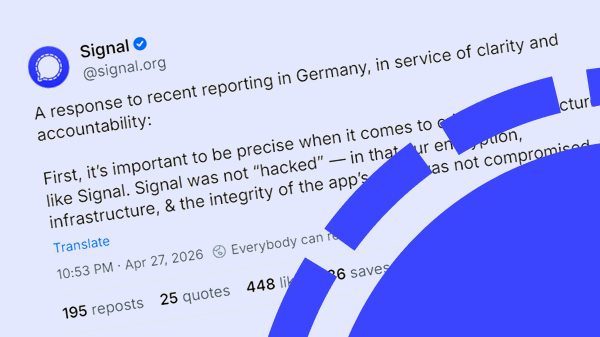
A response to recent reporting in Germany, in service of clarity and accountability: First, it’s important to be precise when it comes to critical infrastructure like Signal. Signal was not “hacked” — in that our encryption, infrastructure, & the integrity of the app’s code was not compromised. 1/
— Signal (@signal.org) 27 april 2026 om 22:53
Resta informato
Vuoi rimanere aggiornato sulle ultime novità Signal notizie, suggerimenti e aggiornamenti? Seguici su Threads, Bluesky o Mastodon.